Daily Stress and Adaptive Processes for Healthy Aging
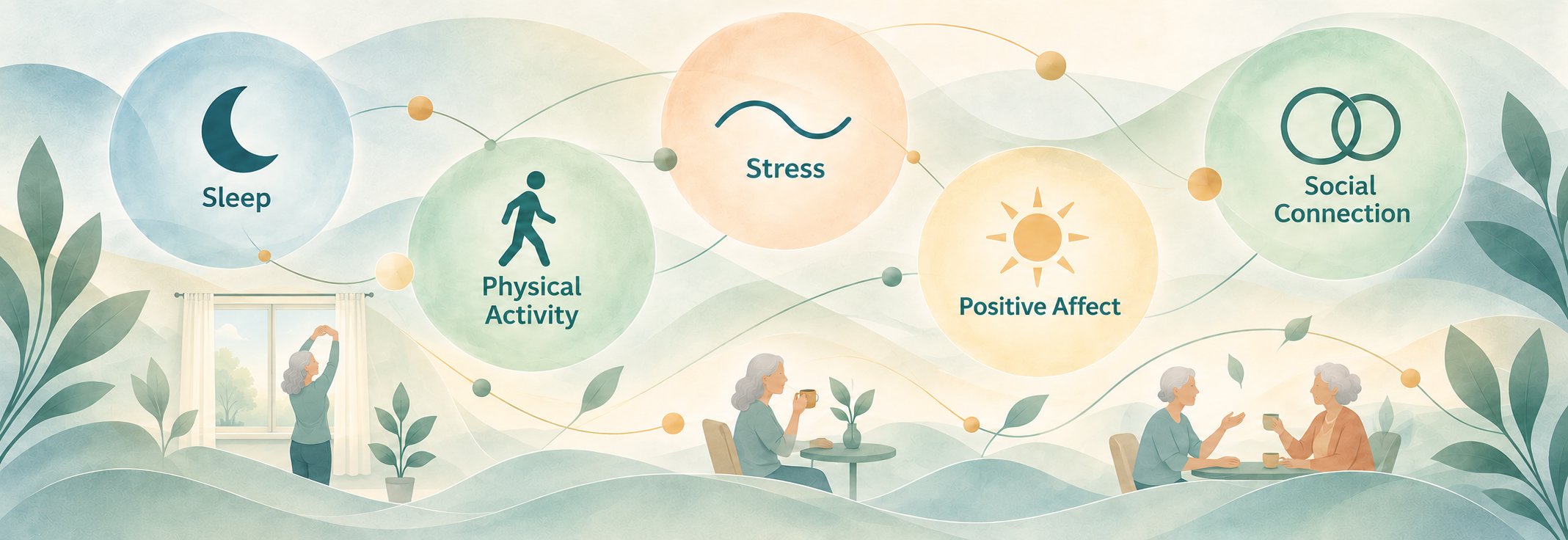
We investigate how adults navigate everyday stressors and uplifts and adapt to challenges as they age, with a particular focus on the dynamic interplay between health behaviors (e.g., sleep and physical activity) and psychosocial functioning. Taking a broader life-course perspective, we also explore how these day-to-day processes relate to earlier life experiences and contribute to long-term health and well-being.
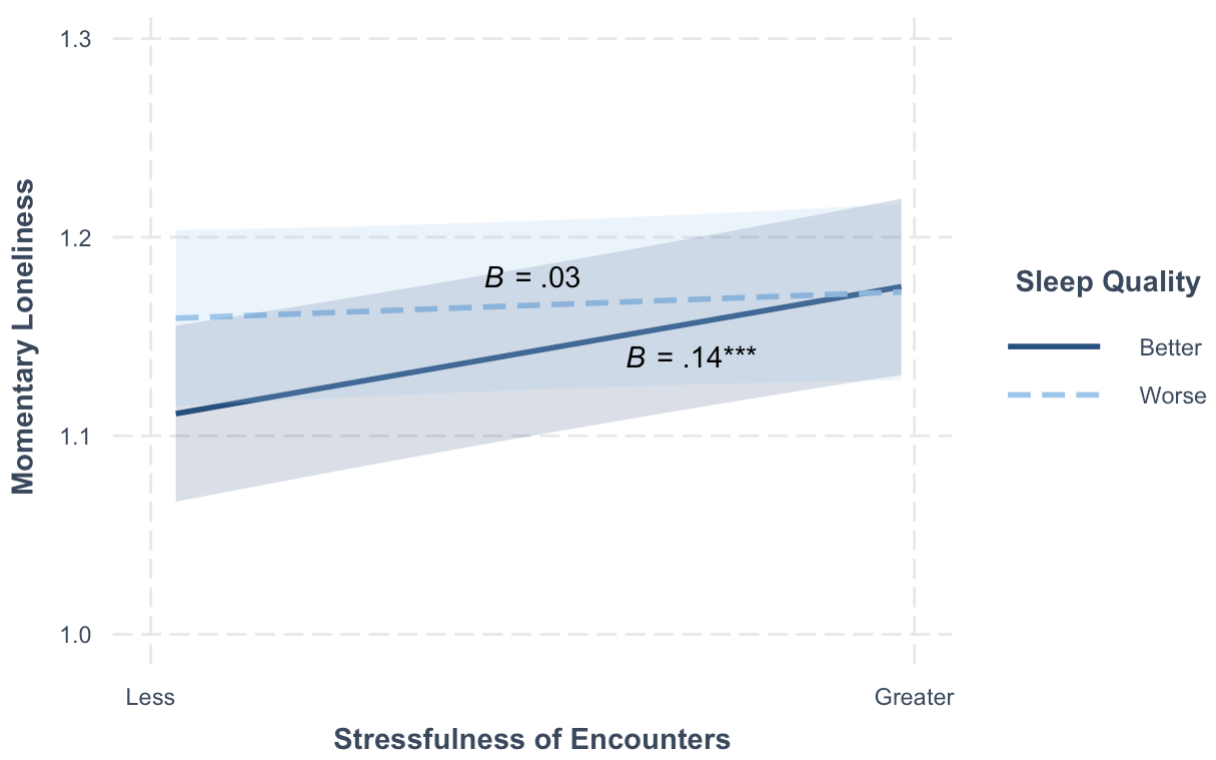
Figure. Daily sleep and socioemotional experiences in late life.
From Zhou et al. (2025). The Journals of Gerontology, Series B.
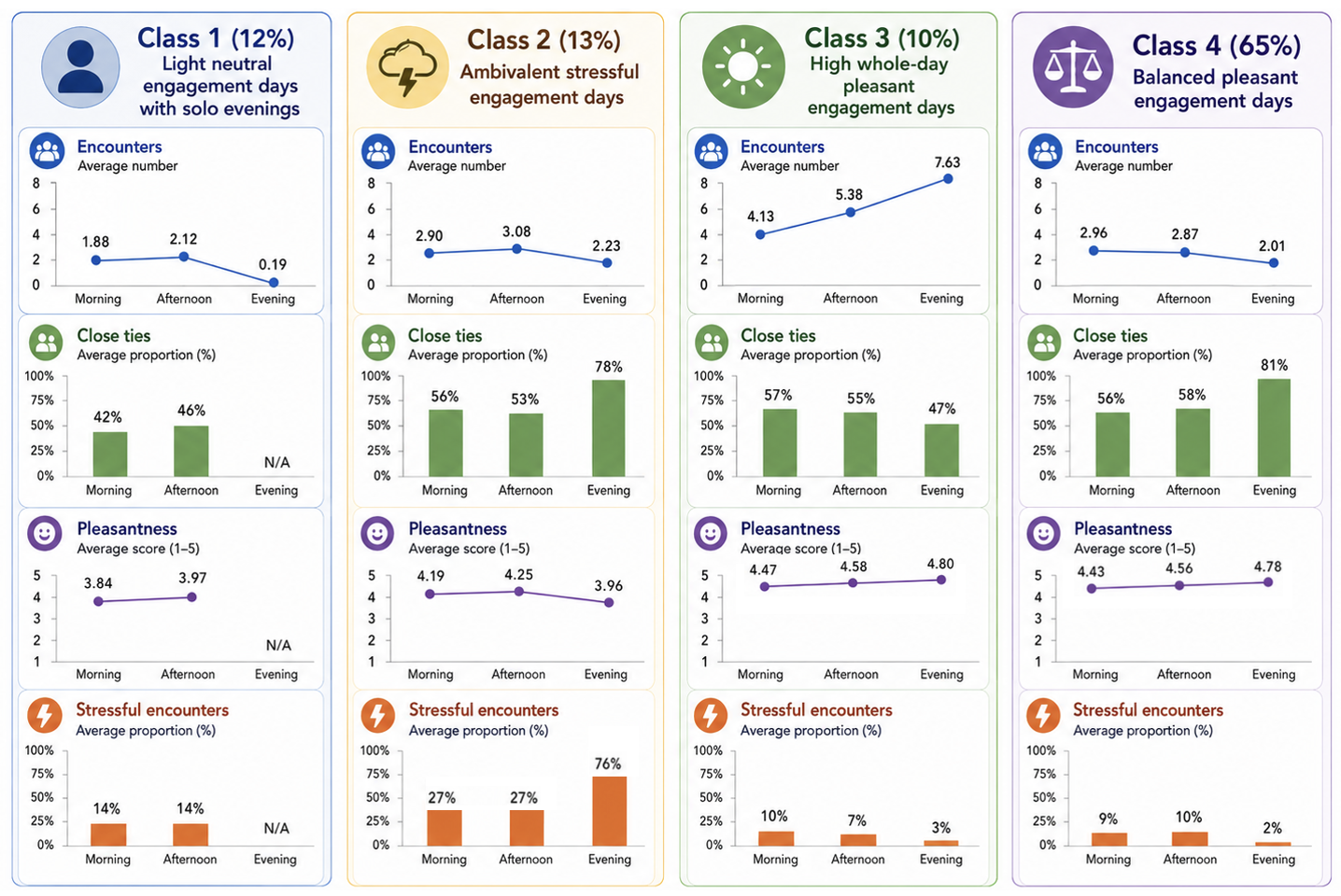
Figure. LPA profiles of daily social experiences in late life.
Adapted from our ongoing work.
02
Emerging Technology and Health Across the Lifespan
We leverage wearable sensors and emerging digital technologies to collect multimodal data through active and passive assessments in everyday life. By integrating these rich, real-world data with advanced quantitative methods and artificial intelligence, we aim to better understand and promote health behaviors and psychosocial well-being across diverse populations. Ultimately, we seek to translate these insights into personalized, just-in-time adaptive interventions that respond to individuals' changing needs in daily life.
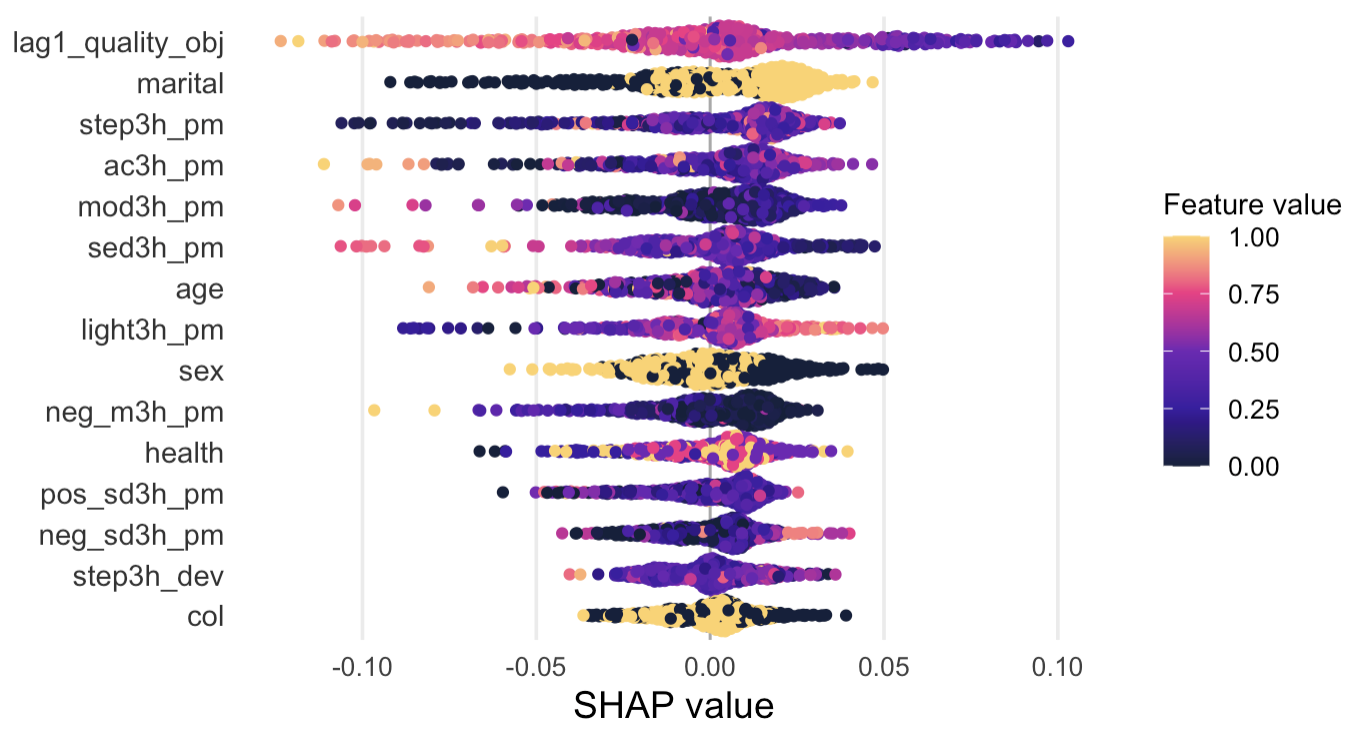
Figure. SHAP plots for objective sleep quality ML forecasting model.
Adapted from our ongoing work.
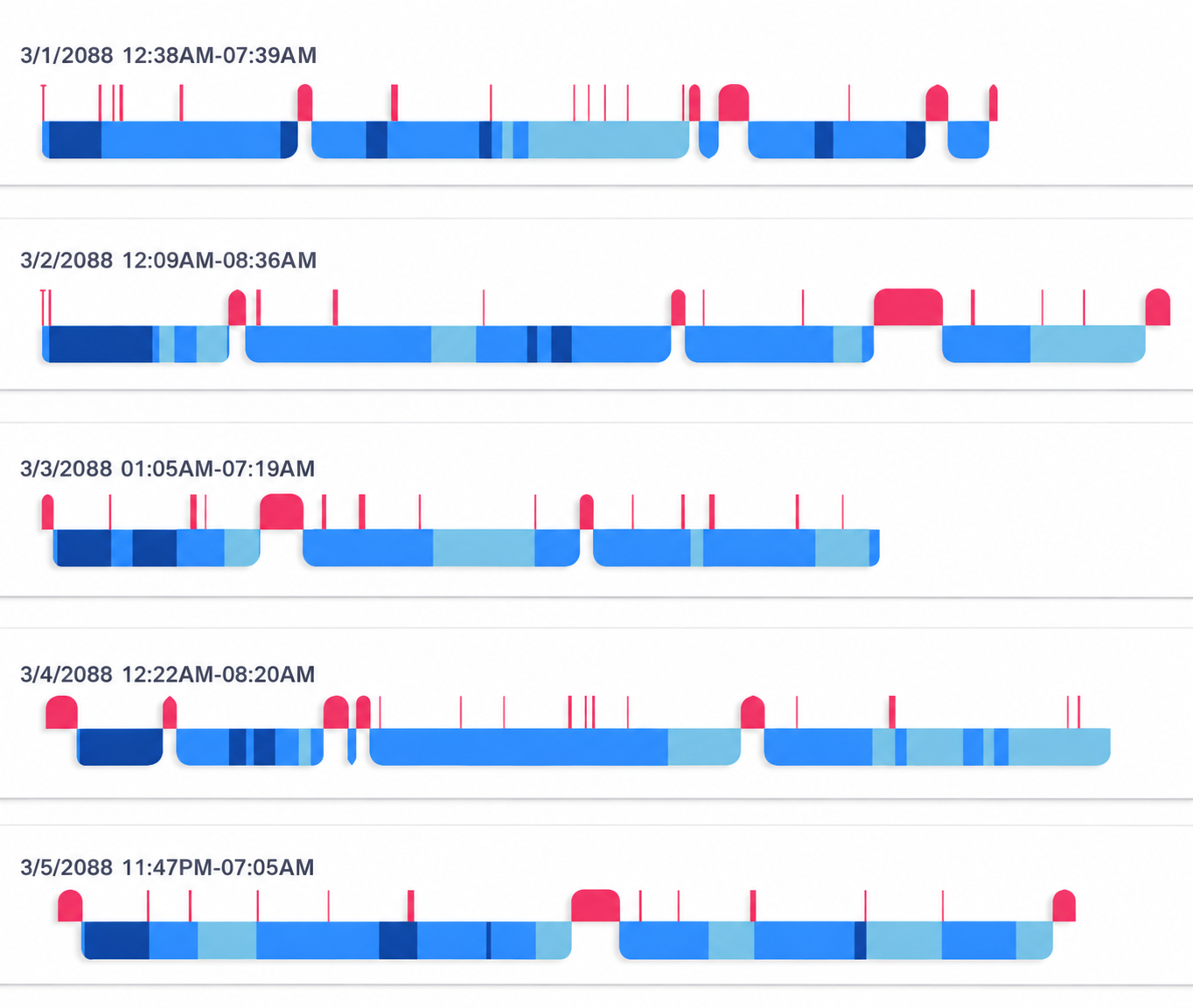
Figure. Sleep duration and stages across five days measured by Fitbit.
Adapted from our ongoing work.
03
Family Relationships Across Generations and Contexts
Family relationships are central to how we grow, adapt, and age. We investigate how these relationships, particularly intergenerational ties, evolve and shape development and well-being across the lifespan. We examine their changing roles and functions across life stages, from early socialization to caregiving in later life. Drawing on biopsychosocial perspectives, we explore the interplay among neural, psychological, and social processes underlying family dynamics. Through a culturally sensitive lens, we also examine how family dynamics unfold across diverse sociocultural contexts.
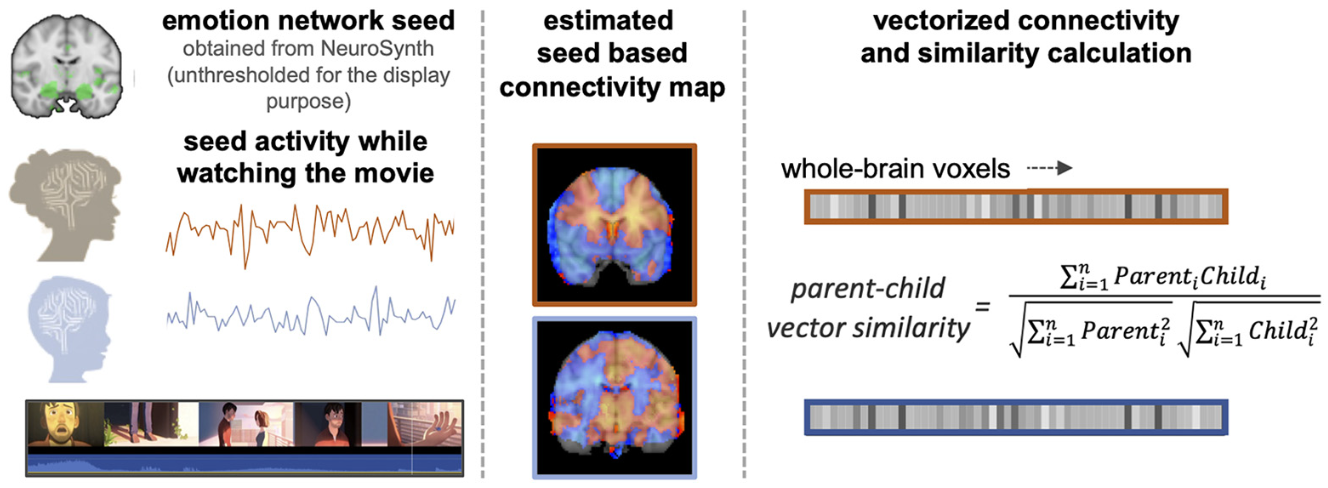
Figure. Schematic of the analytical approach for quantifying parent–child neural similarity.
From Zhou et al. (2023). The Journal of Neuroscience.
Our Research Approaches
Our lab integrates diverse research methods to study human development and relationships across contexts and timescales. Our approaches include self-report surveys, neuroimaging, ecological momentary assessment, and naturalistic methods such as accelerometry and everyday audio recordings. We conduct secondary analyses of large-scale, nationally representative datasets while also collecting original data in laboratory and real-world settings. By combining these complementary approaches with advanced quantitative methods, we seek to develop a more comprehensive, interdisciplinary understanding of how individuals and families adapt, stay healthy, and maintain quality of life across generations in an era of rapid population aging.